Psychosocial Safety
Your Psychosocial Safety score reflects the degree to which people within your organisation are protected from psychosocial hazards and experience a culture that supports psychological health - where they feel respected, safe to interact with others, take interpersonal risks and share their opinions.
Because of the potentially sensitive nature of these results, only your Salpulse Administrator(s) will be able to view your organisation's psychosocial safety scores.
During the Salpulse Survey, your people were reminded that they can choose to answer the survey anonymously, encouraging honest feedback, particularly about the psychosocial safety (and trust) questions.
Interpreting the Results
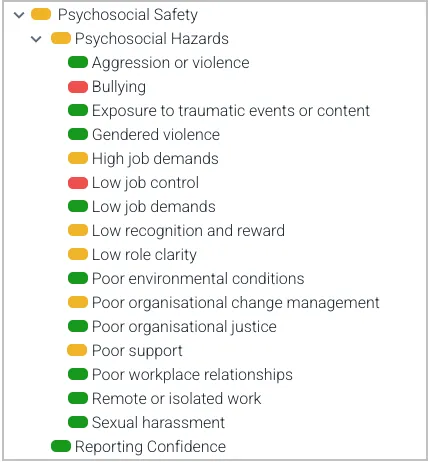
Worksafe regulations highlight 16 psychosocial hazards that you are required to identify, then manage, in order to eliminate or reduce these hazards in your workplace. Under the Psychosocial Safety node, you will find your scores for each of these 16 Psychosocial Hazards as well as your score for Reporting Confidence (which is also mandated by the regulations).
Baseline Coverage
Salpulse's Psychosocial Safety questions provide you with baseline coverage of all the psychosocial hazards and the most important components of the worksafe regulations. The way to use Salpulse is to kick off a deeper investigation into any of the hazards that show up as red in the survey results and potentially, those that are amber.
Breakdowns
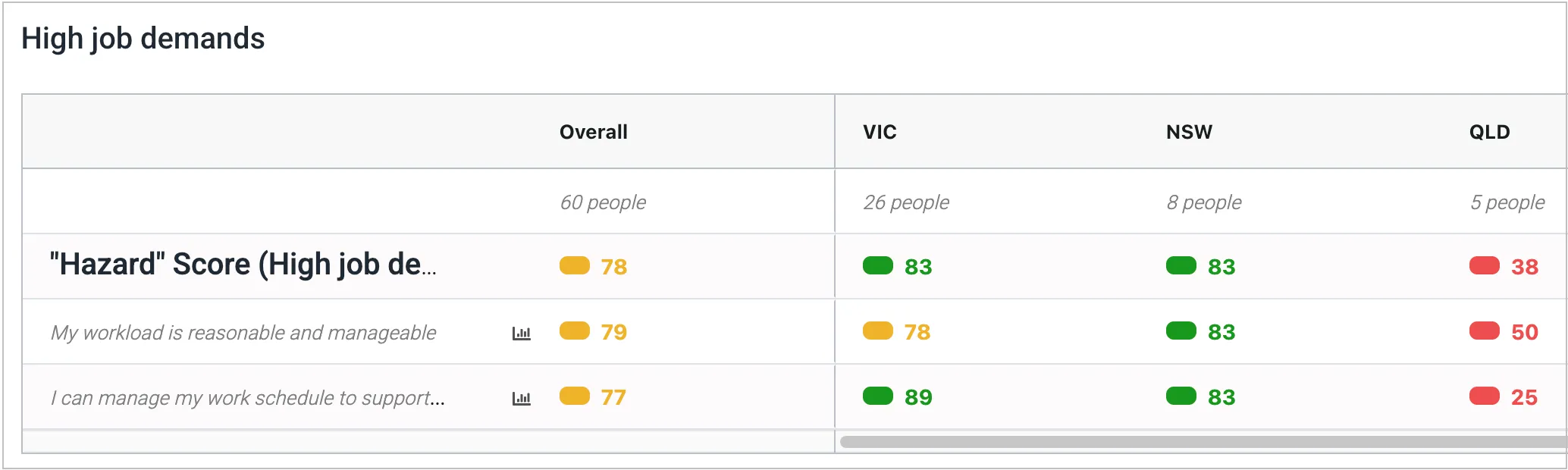
You can isolate the source of a psychosocial hazard by using the Department and Region Breakdowns feature.
Questions Appear Under Multiple Hazards
We have carefully curated a set of questions in the Salpulse Survey that give you adequate coverage of the worksafe psychosocial safety regulations, whilst not overloading your people with too many questions that delve into every possible situation described in the Act.
The Act describes a lot of overlap between the hazards and consequently, some of our questions are designed to be counted in multiple categories (hazards or reporting confidence), so you will see these questions appearing in the results more than once. This is by design.
Note that each question is counted only once for the Node Rollup scores.
Some of the Organisational Trust questions are also counted in the Psychosocial Safety nodes.
A low score for Psychosocial Safety, or any of its questions, may indicate that you have a toxic workplace environment. If this is the case you should take immediate steps to address it.
It's worth expanding the distribution graphs for each drill-down question in this section because psychosocial safety can be experienced very differently for individuals within the same organisation and even if only a few people feel unsafe, it's worth investigating further. Here's an example distribution for the question "I feel respected by management" which has a score of 86:
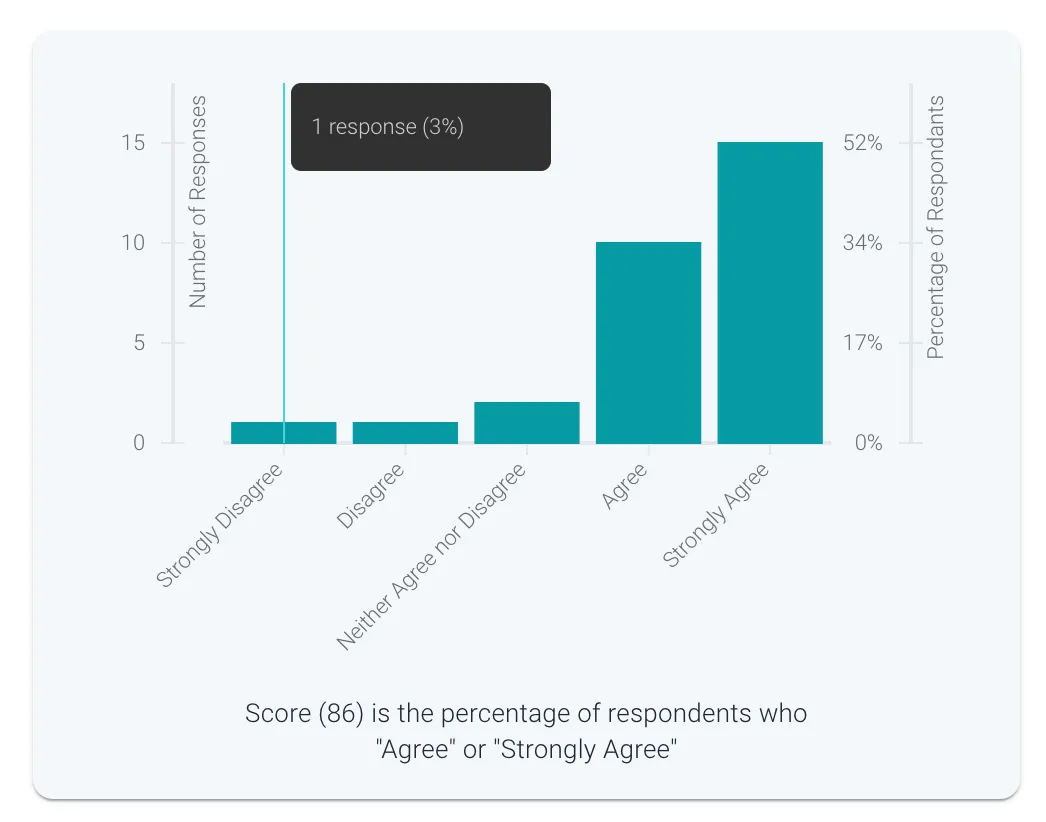
Whilst 86% of respondents feel respected by management, for 2 people (who strongly disagree or disagree), they feel actively disrespected by management.
Interventions for psychosocial safety need to be handled carefully to protect the identity of people who may be feeling vulnerable. If your Culture Code has a value centred around valuing or respecting people, this is a great place to start. Remind people that this value was agreed to through a process of co-creation. Remind people of the love to see, expect to see and don't want to see behaviours for this value. Encourage people to call out toxic behaviour when they see it, by referring back to the Culture Code - statements like "this is not how we agreed we would behave" can be helpful.